

8 models the top 0.01% use to build wealth
After years of studying self-made billionaires, these are the patterns that kept showing up.

Most people assume the ultra-wealthy got there through some secret hack, an unfair advantage, or just plain luck.
They did not.
After years of studying self-made billionaires, sitting in rooms with them, reading every biography and interview I could find, the same patterns show up again and again.
Not tactics. Not hustle porn.
A completely different operating system for how they think about luck, money, people, and time.
None of these require you to already be wealthy. These are not things you adopt after you make it. These are the things that get you there.
Here are the eight patterns. Read them slowly. One of them will change something for you this week.
1. Luck Is Something You Increase
Most people think luck happens.
The best founders think luck compounds.
Every email you send.
Every article you publish.
Every founder you meet.
Every product you launch.
Raises the odds that something unexpected happens.
Richard Branson didn’t get lucky once.
He created hundreds of opportunities for luck to land.
The rule:
You don’t control luck.
You control how often luck has a chance to find you.

AI Prompt to use right now:
You are a personal strategy coach who specializes in opportunity creation. Here is what my week currently looks like: [describe your typical week, meetings, outreach, content, networking].

Here is what I am trying to achieve: [your goal].
Audit my week and tell me honestly: am I raising or lowering my odds of a lucky break?

Then give me 5 specific low-effort actions I could add this week that would raise my odds, anything I am currently doing that is quietly lowering my odds, and a simple weekly odds tracker I can use going forward.
2. Build More Than One Currency
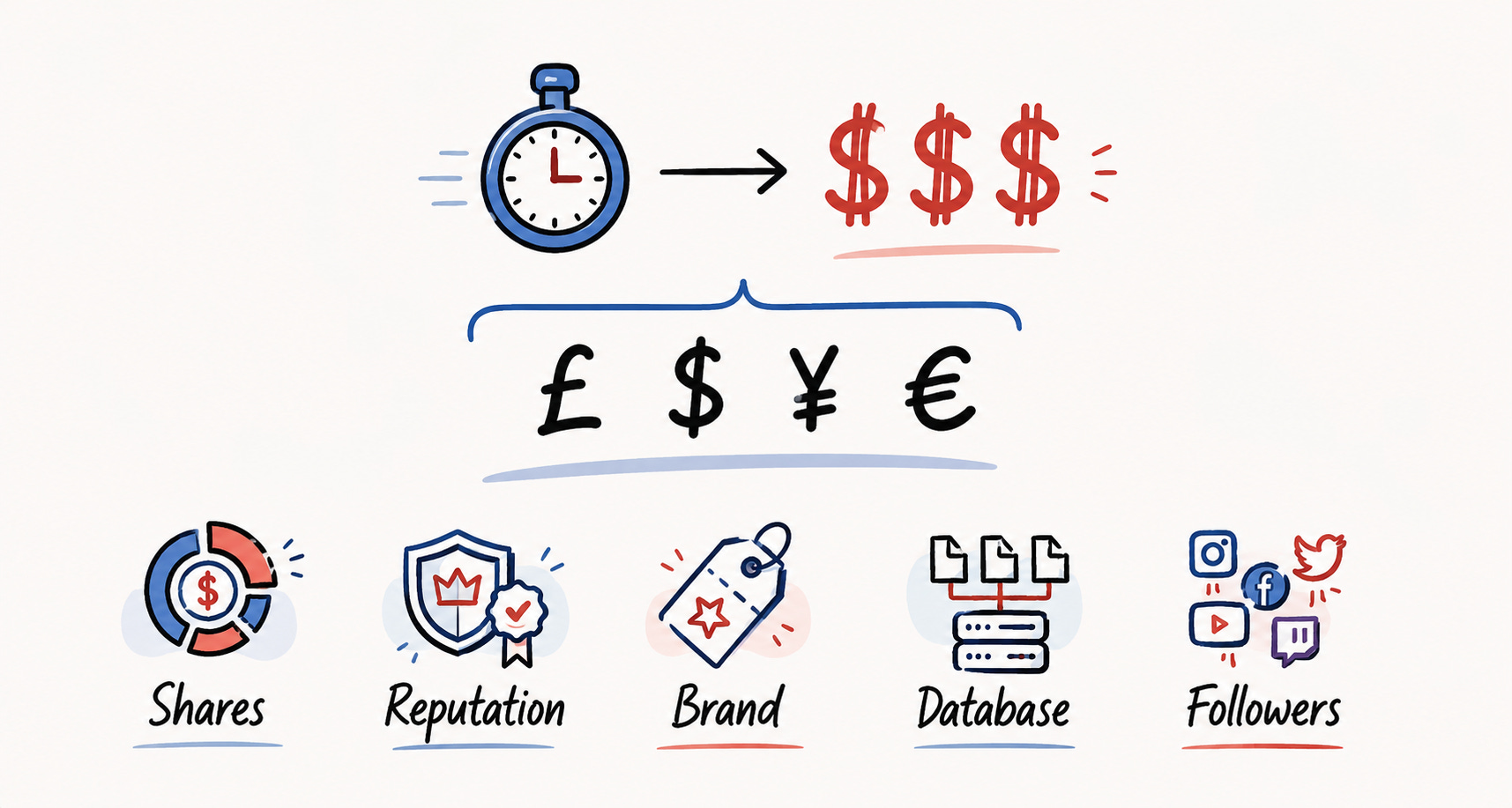
Most people think there are only two currencies: time and cash.
The people building empires know better.
They treat reputation, brand, equity, and audience as currencies too. Assets they can spend without touching a bank account.
Someone with 600,000 email subscribers can push send and get a deal oversubscribed instantly. That list is a currency. Someone with a company valued at $100 million can trade 10 percent of it for a $10 million acquisition. The shares are a currency. Even 30,000 LinkedIn followers is a chip you can trade for a board seat or a stake in something interesting.
The rule: If you only think in time and cash you are playing with two currencies while everyone else is playing with five.
AI Prompt to use right now:
You are a wealth strategist.

Here are the assets I currently have beyond cash and time: [list your audience, reputation, equity, skills, network, content].

Tell me which of these I am underusing as a currency, how I could deploy each one in the next 90 days, and one specific deal or opportunity I could pursue using a non-cash asset I already own.
3. Start From The Future
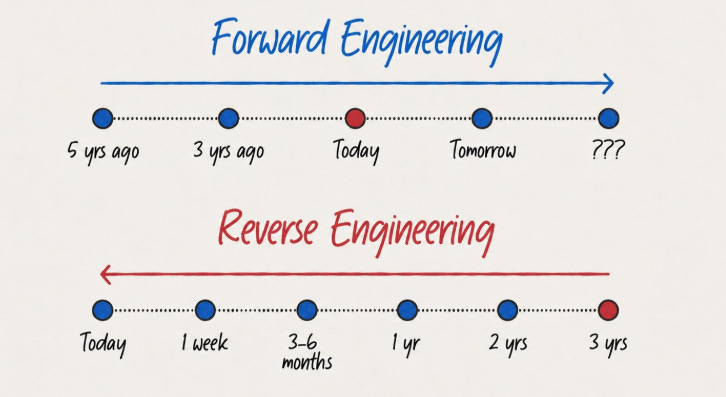
Most people plan forward. What did I do yesterday. What do I do tomorrow.
The people building at the highest level plan backward.
They project three years into the future. Team size, revenue, product line, reputation. They build a vivid picture of exactly what that looks like. Then they work backward. What does that mean for year two. Year one. Six months. This week.
This is also how they raise money and recruit talent. They do not ask for investment. They paint the future and say your capital unlocks this. They do not hire a CEO. They show the vision and ask if you want to be the person who gets us there.
The rule: Do not ask what is next based on where you are. Ask what has to be true in three years and what that means for this week.
AI Prompt to use right now:
You are a strategic planning consultant.

My three year vision is: [describe it vividly, team size, revenue, products, reputation].

Reverse engineer this into a backward timeline. What has to be true two years from now.
One year. Six months. The next four weeks.
For each stage tell me the one resource, hire, or relationship I need to unlock it and a one sentence pitch I could use to enroll someone into helping me get there.
4. Build Through People
The best founders don’t try to become great at everything.
They become great at assembling exceptional people.
They constantly look for:
distribution
operators
specialists
investors
Businesses don’t scale because founders work harder.
They scale because founders build stronger teams.
The rule:
Your network becomes your operating system.
AI Prompt to use right now:
You are a talent strategist helping a founder build their inner circle.

My venture is: [describe your business].
My biggest current gap is: [what is missing right now].

For each of the four categories, distribution, leaders, practitioners, and pools of capital, tell me what this person looks like specifically for my situation, where I am most likely to find them, and one outreach message I could send to start the conversation.
5. Stand Against Something
Great brands don’t only communicate what they build.
They communicate what they’re fighting against.
Apple challenged complexity.
Nike challenged excuses.
Patagonia challenged environmental neglect.
People rally around movements.
Not products.
The rule:
If everything sounds positive...
Nothing becomes memorable.
AI Prompt to use right now:
You are a brand strategist who specializes in mission driven positioning.

My business is: [describe what you do].
The status quo I am frustrated by is: [the old way or system that is failing your customers].

Help me define a clear enemy for my brand and team to rally against.
Give me a one sentence enemy statement, three ways this enemy could show up in my marketing without turning into negativity, and a rallying line my team could repeat that captures what we are fighting for and against.
6. Scale Through Systems
The economy does not reward value. It rewards value at scale.
Some of the most valuable people alive, nurses, teachers, can only help one person at a time. The people building empires know how to be valuable to thousands or millions at once.
Four ways they do it.
Intellectual property: books, systems, frameworks, content, franchise manuals.
Distribution channels: owning the audience, subscribers, platforms people already buy from.
People: training others to deliver the value consistently without you in the room.
Software: code that does the thing once and delivers it to anyone with an internet connection.
The rule: Simple scales. Complexity hits a wall fast. Always be asking how do I simplify this enough to scale it.
AI Prompt to use right now:
You are an operations strategist who specializes in scaling businesses.

Here is how I currently deliver value: [describe your delivery model].

Score my business against these four scale vehicles, intellectual property, distribution channels, people, and software, from 1 to 5 and explain each score. Then recommend the one vehicle I should invest in next to get the biggest jump in scale and give me three concrete first steps to start building it in the next 30 days.
7. Become Impossible To Ignore
The most successful people are exceptional at being seen as the highest value person in the room.
They do not sit undercover in the audience. They win awards, get known within their industry, write books, give talks. They deliberately engineer how they are perceived so they get to meet people on their own terms.
The quiet billionaire totally undercover story exists. But it is the exception not the rule. Most ultra successful people are known the moment they walk in because they engineered it that way.
The rule: You want to meet people with the framing already in place that you are the high value person in the conversation.
AI Prompt to use right now:
You are a personal brand strategist.
Here is my field and current standing: [your industry and credibility markers].

Here is the room I want to be recognized in: [specific community, conference, or market].

Give me a six month high value positioning plan including three realistic recognition moves I could pursue given my current stage, how I should show up differently at industry events, and one thing I could publish or create in the next 30 days that would most efficiently build this reputation.
8. Finish Cycles
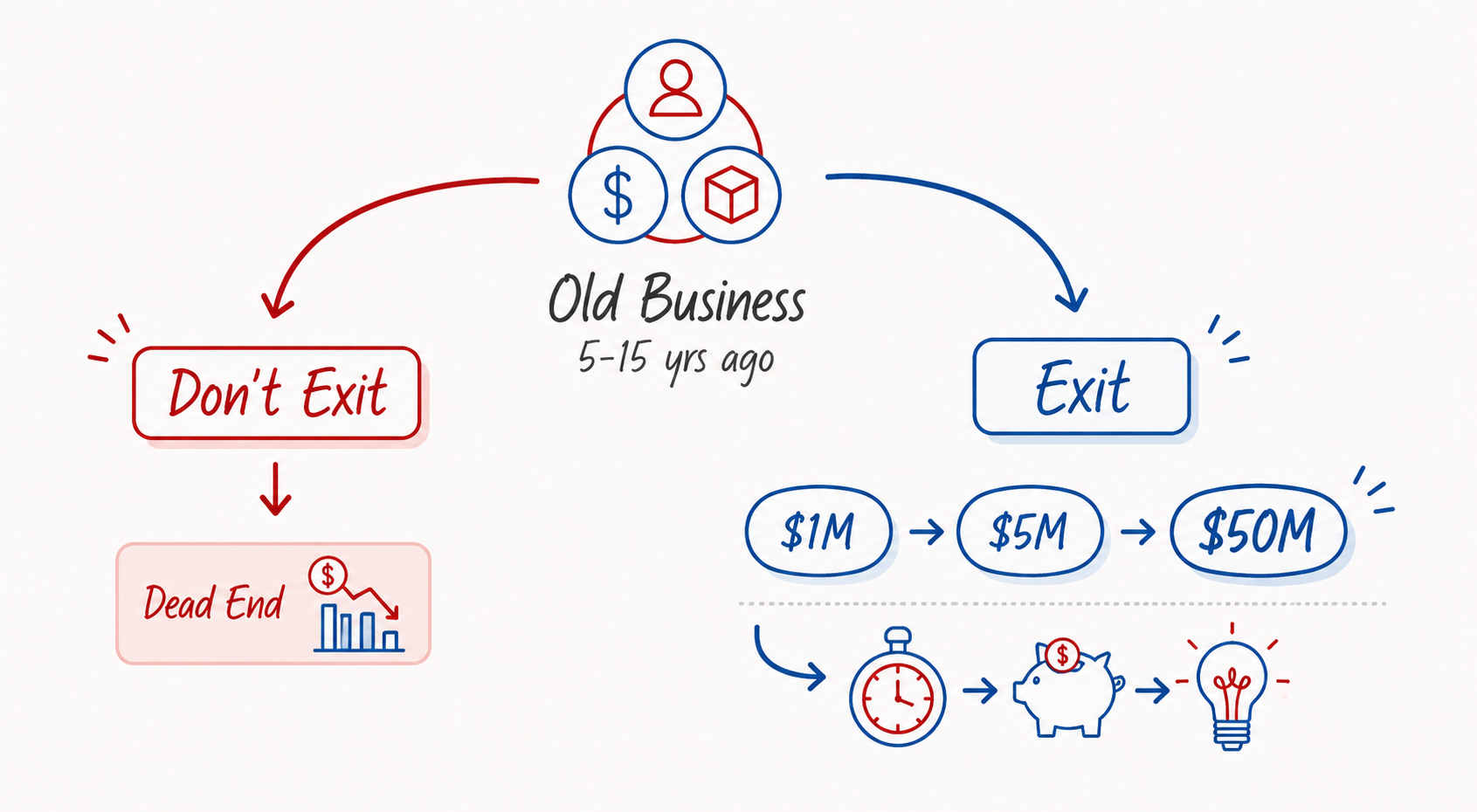
Almost every extremely wealthy person built something and eventually sold it.
A company. A building. A stake. A position.
An exit is not just a payday. It gives you your time back with new lessons attached. You have completed a full cycle so you can honestly ask what would I do differently, faster, bigger next time. That is why serial entrepreneurs tend to get bigger with each venture. They are not smarter. They have just banked another full learning cycle.
The trap is holding on too tight. A business built on five year old thinking, never exited, never consolidated, rarely produces the next breakthrough because your best ideas today are based on everything you learned since you started it.
The rule: If you never exit you never fully cash in the learnings either. Sometimes the fastest way to something bigger is to close the current chapter.
AI Prompt to use right now:
You are an M&A advisor who specializes in helping founders think clearly about timing an exit.

Here is my business: [brief description, age, rough revenue].

Here is why I have been holding on: [your honest reason].

Walk me through an honest exit readiness assessment including signs that this business is or is not ready for an exit, the tradeoffs between selling in one go versus selling down gradually, and what I would most likely do with the time, capital, and lessons if I exited in the next 12 months.
The Pattern
None of these require permission.
None of them require you to already be wealthy, connected, or lucky.
They require you to see the game differently than most people around you are seeing it.
Pick one pattern from this list. Not all eight. One.
Put it to work this week.
That is where it starts.
Featured Tools
The tools serious builders are using right now.
FocuSee ⭐ Featured Sponsor
You spent months building your product.
Don’t lose the deal because your demo looks amateur.
FocuSee automatically turns simple screen recordings into polished product demos with smart zooms, motion effects, and AI-powered editing.
Perfect for founders, SaaS builders, and agencies.

Setapp - Launch your Mac app in front of paying users while Setapp handles billing, licensing, taxes, and distribution.
Atoms.dev - Multi-agent AI that helps you research, build, and grow products faster.
Glitter AI - Turn any workflow into a professional SOP automatically.
Shift AI - AI built directly into your browser workflow so you can summarize, write, and research without switching tabs.
❤️ Founders & AI Builders — Get Featured
If you’ve built an AI tool and want to reach 60,000+ AI-first readers.you can now sponsor an upcoming AI Cheatcode issue.
👋 Reach out here to collaborate.
📩 Quick Favor
If this email landed in your Promotions tab,
drag it into Primary so you don’t miss the next drop of AI news, tools, and automation blueprints.