

SpecKit GitHub’s New Toolkit

🛠️ SpecKit: GitHub’s New Toolkit for AI-Assisted Coding
AI-assisted development has taken huge leaps in the past year — but one recurring problem remains: AI often writes code that doesn’t fully match the requirements.
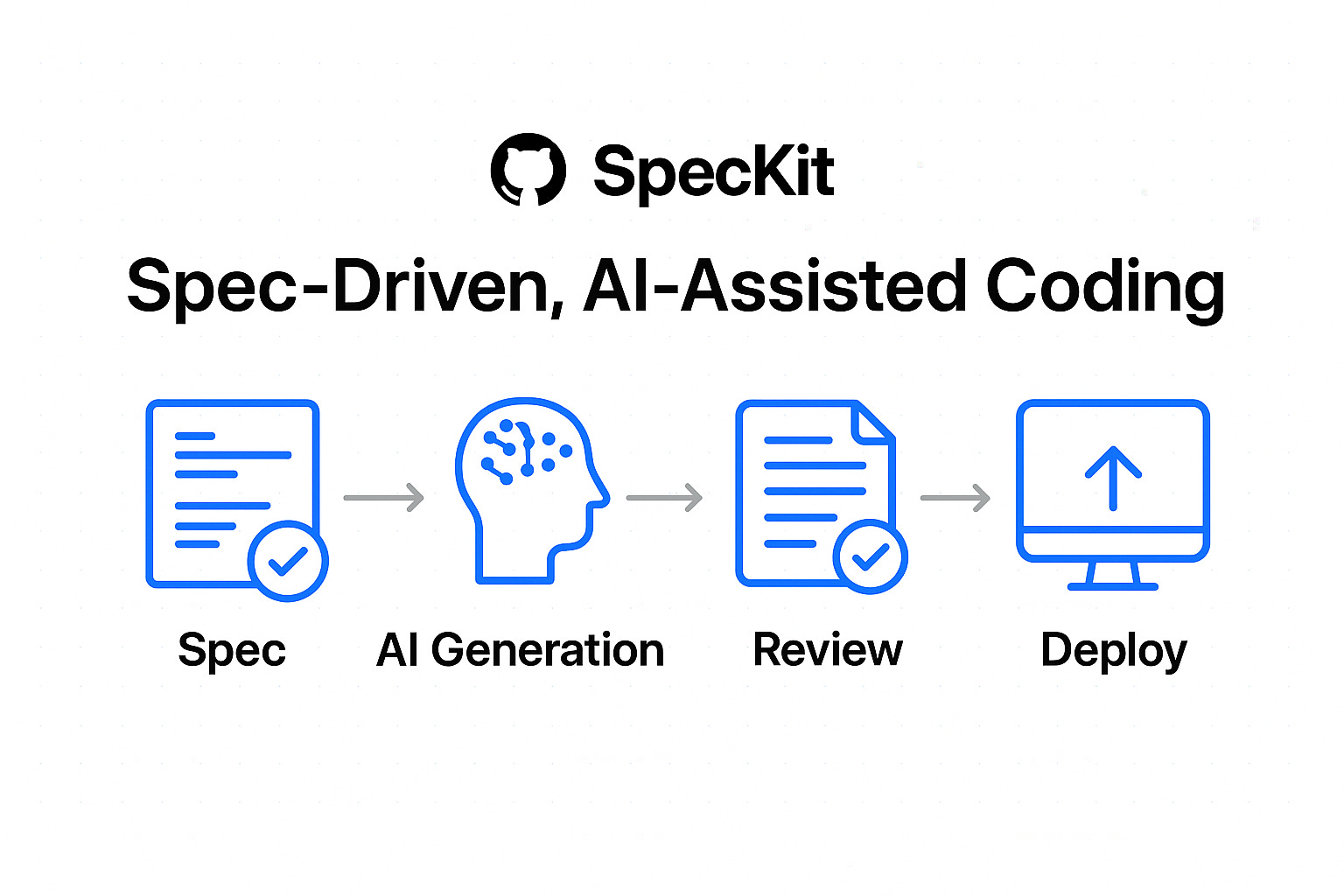
This week, GitHub introduced SpecKit, an open-source framework that tackles this challenge head-on by tying AI-generated code directly to project specifications.
👉 Read the full announcement here
🔹 Why It Matters
AI coding assistants like Copilot, Cursor, and Replit Ghostwriter are great at scaffolding, but they often:
Drift from the original intent
Miss architectural constraints
Introduce subtle inconsistencies
SpecKit aims to close the spec-to-code gap by anchoring AI generation to clearly defined requirements.
🔹 What Engineers Can Do With SpecKit
Specification-Driven Generation → Give AI precise specs, and it generates aligned code.
Integrate Into Workflows → Works alongside existing CI/CD and testing pipelines.
Improve Reliability → Fewer mismatches between design docs and delivered features.
Open Source Flexibility → Adapt it to your language, framework, and project style.
🔹 Why This Shift Is Important
This isn’t just “autocomplete on steroids” anymore. With tools like SpecKit, we’re moving toward:
AI as a dependable collaborator
Human engineers as system architects & reviewers
Fewer cycles wasted on fixing misaligned code
In short: AI gets faster, but also more accountable.
🔹 The Takeaway
SpecKit is an early signal of where AI coding is headed: spec-driven, verifiable, and production-ready.
If you’re already experimenting with AI in your workflow, this is worth a look — not just for faster coding, but for higher confidence in what the AI delivers.